> Tonight we had rice, beef, and green beans in this yummy tomato sauce.
>
Followers
Saturday, August 13, 2011
Tarantula Part Deux
Comfort zone expansion
The organization we came to volunteer with was started by an american priest turned doctor, Father Rick. He runs a handful of sister hospitals in one of the nicer (relatively speaking) parts of port au prince across from the UN compound. His children's hospital is apparently the best and well respected children's hospital in the city.
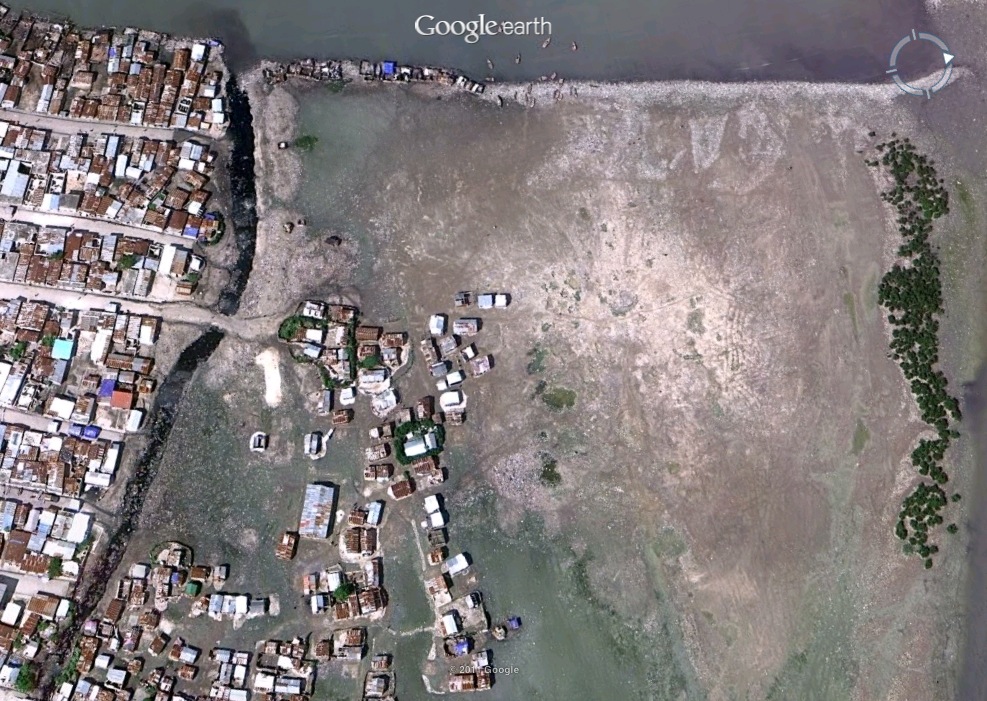
Recently he started a new project in Cite Soleil, the poorest slum in all of Haiti. He's building a small hospital within a few hundred yards from the ocean...... and in Haiti, the closer you get to the ocean, the worse off you are..... shit literally runs downhill in a hillside city with open air sewage. His committment to serve the poorest of the poor is truly inspiring. Without a healthcare facility in Cite Soleil, the people of the community really have nowhere to go for their healthcare needs. However, operating in such a slum does come with some substantial safety concerns. The area has a history of substantial violence and gang activity, just like any other slum. Father Rick's approach to operating in an area like this is to get the local community involved and to ensure they know that if their family members become ill, his hospital will restore their health.
While the Cite Soleil hospital is still under construction, they decided to start a tent clinic right next to the construction site to start seeing patients. Since this clinic was new, this is where the organization needed the most help. Dr. Boyce jumped on the opportunity to see patients at the clinic upon arrival and had gone down to Soleil with just an interpreter and a few duffle bags of medications. When we arrived, we were asked if we wanted to go down to Soleil as well. Will thought it would be a great experience for us so we decided to go.
Driving into Soleil the first day was completely shocking to me. I'd never seen anything close to the poverty level that is present in Soleil. We went down with two of Father Rick's personal security guards and were also told that all of the construction workers on site were instructed to serve as security as well. Both our personal security guards and the construction workers had considerable ties to the community. The significant security presence gave me some sense of comfort, but I was as far out of my comfort zone as I'd ever been.
We set up the clinic and the first day went very smooth. We probably saw about 50 patients. A Spanish surgical assistant treated wounds and Dr. Boyce saw all of the other patients. We helped out by setting up, taking vitals, organizing and dispensing medicine for Dr. Boyce, performing urine tests, and helping out as needed. Since Will speaks Spanish and Creole, he was able to do some interpreting for the Spanish surgical assistant and his father. We also came with a young Haitian interpreter, Jean, who speaks five languages, and a young Haitian man, Junior, who is getting ready to start medical school in Haiti. We saw many diseases that day. One elderly woman was suspected to be in an advanced stage of a cholera infection and probably would have died that day if Dr. Boyce didn't come down to the clinic. Dr. Boyce called up the hospital and had them send their ambulance (possibly the only one in the city) down to pick her up. We saw a handful of children with suspected malaria (a highly curable disease), many men and women with urinary tract infections, a lot of body pains, wounds, common infections, scabies, malnutrition, and some common colds.
A few things really stood out to me that day. It felt great to be part of a team that truly made a difference in other peoples lives. I also noticed that for being incredibly impoverished, the patients we saw, for the most part, maintained great hygeine and appearance. If you took many of those patients out of Soleil and put them in any of the major cities in the US, they would not stand out at all. Despite their desolate conditions, poor Haitians have a lot of pride. Lastly, as we were getting ready to leave, the ambulance had not arrived yet for the woman with cholera. Many of the team members were ready to leave, but Dr. Boyce refused to leave until the ambulance arrived. Some of the team members objected to this, but Dr. Boyce stood his ground and even said he'd stay by himself if everyone else wanted to leave. I was really touched by this gesture. What a man!
We went back to Soleil the next day and everything was going great until a few gang members started a little altercation outside our tent. I could feel the tension in the air. Our security guards and the construction workers were able to prevent the altercation from getting ugly and we continued to see patients, but during the moments when the tension was high, I really began to question the prudence of my presence. We were warned that Haitians were very demonstrative in their interactions with each other, but I still felt incredibly vulnerable, more so than any moment in my life. We made it out safely, but the rest of the day and night I thought long and hard about how I felt. Was jeopardizing my own perception of safety worth it? I was presented with the dillemna that all global health workers working in a high risk environment have to face. I feel a little guilty about it, but I reached the conclusion that my sense of safety isn't something I am willing to jeopardize and that I wanted to stick to the confines of the more established hospitals for the remainder of the trip. It really takes a very special person to go into a situation like a tent clinic in Soleil. At this point, I don't think I am one of them, but I will continue to reevaluate because God knows these people need the help. Maybe I am just a few more experiences away from having the comfort zone of Will, Dr. Boyce, and Carla, or maybe I just wont get there. Regardless, this has been a great slice of life and I am grateful to Will and his father for sharing this experience with me. These are the type of lessons you just can't learn in a book. You have to feel them for yourself.
From Below part 2
Friday, August 12, 2011
It's friday
We also went to a hotel tonight that was at the very top of this hill. It had an amazing view of the country. We had some burgers and beers with Jean, our driver Marciel, and a few of Will's friends. Upon our return back home we found a tarantula on our driveway at home.
From below
I don't want to overload the blog with misery, but this image is one that was so appalling that I felt it had to be seen. People live immediately to the left of the picture and we set up the clinic about 1000 feet to the right.
Our Tent Clinic in Soleil
Thursday, August 11, 2011
Thursday
Will's words
Will Boyce
Bonjou Tout Moun,
As we descended the stairs from the plane on Wednesday morning, the smells and sounds of Port-au-Prince filtered through the slow ebbing of our twleve-hour red-eye. Tuesday had passed paradoxically in a scattered blur and yet with a simultaneous vivid and myopic focus. I awoke that morning with such immediacy, with the weight of my cumulative physics-final flooding away all reminence of the mornings soporific haze. A parallel, less conscious corner of my mind began highlighting and prioritizing the countless details that stilled needed to happen before flying out just hours after the exam ended. As I said, the day passed paradoxically, in a scattered blur and with a simultaneous vivid, myopic focus.
Yet here I was in the Caribbean's tropical, humid heat that had a density like we were walking under water withut the weightlessness. Haitian Compas music, as part of the welcome wagon displaced through the disembarking passengers in a raw, acoustic simplicity – four guys, a few instruments awkwardly hand painted with Western Union advertisements. I couldn't help but smile, in fact I couldn't stop smiling. I was home to a certain degree and there was a familiar nervousness and excitement rumbling below the surface. The excitement was that I was returning to Haiti. A country inextricably woven into who I am, a relationship that began at such a young age (14) that it is impossible to say which parts of myself it impacted. Yet this time, after months of preparation, planning, conjoling, and convincing I was leading a group of my peers. It was a bit like being 8 years old and showing someone for the first time the contents of my super-secret box that I kept tucked in the deepest shadows beneath my bed, not quite that personal but personal none the less. It was exhilerating and the Haitian airport didn't disappoint. Haitians have never had lines especially not our coersive and omnipresent social line etiquette. We all just piled into the immigrations room and milled about until we miracuously were shuttled forward. The official customs business is simple and fairly easy, but a simple thing like the baggage carousel breaking down produced, with only slight hyperbole, a total breakdown in social order. In a mob-like fashion though without violence or malice that the term mob conjures, the passengers swarmed the 4 square foot hole as our bages were being fed through by hand from the tarmak. This hap-hazard method would get the job done, but what irked me, what I could feel erupting in with such vehement ire was just how completely ILLOGICAL it all was. Yet I also loved it, in fact, I could have cheered them on for the same reason and to watch this inveterately American side of me baulk and insist that this way of dispersing bags was the wrong way to disperse bags was equally amusing. I had stepped out side my comfort-zone enough to hear but not take too seriously my cultural expectations of how things ought to happen. Granted most would agree that its in-appropriate to hurt yourself or others, but nothing like that was going down hear. This was luggage and there was no real hury.
There are only a few situations where you see how cultures and common laws cultivate social norms which are re-inforced by varying levels of social etiquette. Some may believe that certain social behaviors are rigid, stuffy, and de-humanizing while others just down the street will see them as indications of classiness, sophistication, and appropriate public decorum. Yet standing in the unvetted Haitian chaos as everyone grabs, tosses, stacks bags unceremoniously throughout the terminal, and in such stark relief to Newark International airport in New Jersey, it read like a glaring neon sign that said "Appropriateness is Cultural" and that almost everyone unconsciously believes that their appropriate behavior is THE appropriate behavior. What makes it so hard is that when the underlying rules shift so dramatically, the anxiety is real, and it feels as if the plane is coming in for a landing and the control tower has suddenly gone silent, or it feels genuinely disrespectful when we don't receive thank you cards or a nod of appreciation when holding open the door for someone. What I have learned is that I'm too mired in my cultural up-binging to see things clearly. Somethings will always feel off and yet not be in any way disrespectful, and so I feably try to shift my attention toward peoples intention rather than their behavior. Here in Haiti, in the apparent chaos, at least from my frame of reference, the rules of the game had changed radically and I loved it! Nothing like spending time on Mars to see the Earth that before had been too close and too consistent to reveal how profoundly it had shaped me and how naïve was my sense of volition. Welcome to Hait!